Immediate mode is an API design pattern in computer graphics libraries, in which the client calls directly cause rendering of graphics objects to the display, or in which the data to describe rendering primitives is inserted frame by frame directly from the client into a command list (in the case of immediate mode primitive rendering), without the use of extensive indirection – thus immediate – to retained resources. It does not preclude the use of double-buffering. Retained mode is an alternative approach. Historically, retained mode has been the dominant style in GUI libraries; however, both can coexist in the same library and are not necessarily exclusive in practice. == Overview == In immediate mode, the scene (complete object model of the rendering primitives) is retained in the memory space of the client, instead of the graphics library. This implies that in an immediate mode application, the lists of graphical objects to be rendered are kept by the client and are not saved by the graphics library API. The application must re-issue all drawing commands required to describe the entire scene each time a new frame is required, regardless of actual changes. This method provides on the one hand a maximum of control and flexibility to the application program, but on the other hand it also generates continuous work load on the CPU. Examples of immediate mode rendering systems include Direct2D, OpenGL and Quartz. There are some immediate mode GUIs that are particularly suitable when used in conjunction with immediate mode rendering systems. == Immediate mode primitive rendering == Primitive vertex attribute data may be inserted frame by frame into a command buffer by a rendering API. This involves significant bandwidth and processor time (especially if the graphics processing unit is on a separate bus), but may be advantageous for data generated dynamically by the CPU. It is less common since the advent of increasingly versatile shaders, with which a graphics processing unit may generate increasingly complex effects without the need for CPU intervention. == Immediate mode rendering with vertex buffers == Although drawing commands have to be re-issued for each new frame, modern systems using this method are generally able to avoid the unnecessary duplication of more memory-intensive display data by referring to that unchanging data (via indirection) (e.g. textures and vertex buffers) in the drawing commands. == Immediate mode GUI == Graphical user interfaces traditionally use retained mode-style API design, but immediate mode GUIs instead use an immediate mode-style API design, in which user code directly specifies the GUI elements to draw in the user input loop. For example, rather than having a CreateButton() function that a user would call once to instantiate a button, an immediate-mode GUI API may have a DoButton() function which should be called whenever the button should be on screen. The technique was developed by Casey Muratori in 2002. Prominent implementations include Omar Cornut's Dear ImGui in C++, Nic Barker's Clay in C and Micha Mettke's Nuklear in C.
Quantum natural language processing
Quantum natural language processing (QNLP) is the application of quantum computing to natural language processing (NLP). It computes word embeddings as parameterised quantum circuits that can solve NLP tasks faster than any classical computer. It is inspired by categorical quantum mechanics and the DisCoCat framework, making use of string diagrams to translate from grammatical structure to quantum processes. == Theory == The first quantum algorithm for natural language processing used the DisCoCat framework and Grover's algorithm to show a quadratic quantum speedup for a text classification task. It was later shown that quantum language processing is BQP-Complete, i.e. quantum language models are more expressive than their classical counterpart, unless quantum mechanics can be efficiently simulated by classical computers. These two theoretical results assume fault-tolerant quantum computation and a QRAM, i.e. an efficient way to load classical data on a quantum computer. Thus, they are not applicable to the noisy intermediate-scale quantum (NISQ) computers available today. == Experiments == The algorithm of Zeng and Coecke was adapted to the constraints of NISQ computers and implemented on IBM quantum computers to solve binary classification tasks. Instead of loading classical word vectors onto a quantum memory, the word vectors are computed directly as the parameters of quantum circuits. These parameters are optimised using methods from quantum machine learning to solve data-driven tasks such as question answering, machine translation and even algorithmic music composition.
List of Tesla Autopilot crashes
Tesla Autopilot, a Level 2 advanced driver assistance system (ADAS), was released in October 2015 and the first fatal crashes involving the system occurred less than one year later. The fatal crashes attracted attention from news publications and United States government agencies, including the National Transportation Safety Board (NTSB) and National Highway Traffic Safety Administration (NHTSA), which has argued the Tesla Autopilot death rate is higher than the reported estimates. In addition to fatal crashes, there have been many nonfatal ones. Causes behind the incidents include the ADAS failing to recognize other vehicles, insufficient Autopilot driver engagement, and violating the operational design domain. As of October 2025, there have been hundreds of nonfatal incidents involving versions of Autopilot and sixty-five reported fatalities, fifty-four of which NHTSA investigations or expert testimony later verified and two that NHTSA's Office of Defect Investigations determined as happening during the engagement of Full Self-Driving (FSD) after 2022. Collectively, these cases culminated in a general recall in December 2023 of all vehicles equipped with Autopilot, which Tesla claims it resolved by an over-the-air software update. Immediately after closing its investigation in April 2024, NHTSA opened a recall query to determine the effectiveness of the recall. == Notable fatal crashes == === Handan, Hebei, China (January 20, 2016) === On January 20, 2016, Gao Yaning, the driver of a Tesla Model S in Handan, Hebei, China, was killed when his car crashed into a stationary truck. The Tesla was following a car in the far left lane of a multi-lane highway; the car in front moved to the right lane to avoid a truck stopped on the left shoulder, and the Tesla, which the driver's father believes was in Autopilot mode, did not slow before colliding with the stopped truck. According to footage captured by a dashboard camera, the stationary street sweeper on the left side of the expressway partially extended into the far left lane, and the driver did not appear to respond to the unexpected obstacle. Initially, Yaning was held responsible for the collision by local traffic police and, in September 2016, his family filed a lawsuit in July against the Tesla dealer who sold the car. The family's lawyer stated the suit was intended "to let the public know that self-driving technology has some defects. We are hoping Tesla when marketing its products, will be more cautious. Do not just use self-driving as a selling point for young people." Tesla released a statement which said they "have no way of knowing whether or not Autopilot was engaged at the time of the crash" since the car telemetry could not be retrieved remotely due to damage caused by the crash. In 2018, the lawsuit was stalled because telemetry was recorded locally to a SD card and was not able to be given to Tesla, who provided a decoding key to a third party for independent review. Tesla stated that "while the third-party appraisal is not yet complete, we have no reason to believe that Autopilot on this vehicle ever functioned other than as designed." Chinese media later reported that the family sent the information from that card to Tesla, which admitted Autopilot was engaged two minutes before the crash. Tesla since then removed the term "Autopilot" from its Chinese website. === Williston, Florida, US (May 7, 2016) === On May 7, 2016, Tesla driver Joshua Brown was killed in a crash with an 18-wheel tractor-trailer in Williston, Florida. By late June 2016, the NHTSA opened a formal investigation into the fatal autonomous accident, working with the Florida Highway Patrol. According to the NHTSA, preliminary reports indicate the crash occurred when the tractor-trailer made a left turn in front of the 2015 Tesla Model S at an intersection on a non-controlled access highway, and the car failed to apply the brakes. The car continued to travel after passing under the truck's trailer. The Tesla was eastbound in the rightmost lane of US 27, and the westbound tractor-trailer was turning left at the intersection with NE 140th Court, approximately 1 mi (1.6 km) west of Williston; the posted speed limit is 65 mph (105 km/h). The diagnostic log of the Tesla indicated it was traveling at a speed of 74 mi/h (119 km/h) when it collided with and traveled under the trailer, which was not equipped with a side underrun protection system. A reconstruction of the accident estimated the driver would have had approximately 10.4 seconds to detect the truck and take evasive action. The underride collision sheared off the Tesla's greenhouse, destroying everything above the beltline, and caused fatal injuries to the driver. In the approximately nine seconds after colliding with the trailer, the Tesla traveled another 886.5 feet (270.2 m) and came to rest after colliding with two chain-link fences and a utility pole. The NHTSA's preliminary evaluation was opened to examine the design and performance of any automated driving systems in use at the time of the crash, which involves a population of an estimated 25,000 Model S cars. On July 8, 2016, the NHTSA requested Tesla Inc. to hand over to the agency detailed information about the design, operation and testing of its Autopilot technology. The agency also requested details of all design changes and updates to Autopilot since its introduction, and Tesla's planned updates scheduled for the next four months. According to Tesla, "neither autopilot nor the driver noticed the white side of the tractor-trailer against a brightly lit sky, so the brake was not applied." The car attempted to drive full speed under the trailer, "with the bottom of the trailer impacting the windshield of the Model S". Tesla also stated that this was Tesla's first known Autopilot-related death in over 130 million miles (208 million km) driven by its customers while Autopilot was activated. According to Tesla there is a fatality every 94 million miles (150 million km) among all type of vehicles in the U.S. It is estimated that billions of miles will need to be traveled before Tesla Autopilot can claim to be safer than humans with statistical significance. Researchers say that Tesla and others need to release more data on the limitations and performance of automated driving systems if self-driving cars are to become safe and understood enough for mass-market use. The truck's driver told the Associated Press that he could hear a Harry Potter movie playing in the crashed car, and said the car was driving so quickly that "he went so fast through my trailer I didn't see him. [The film] was still playing when he died and snapped a telephone pole a quarter-mile down the road." According to the Florida Highway Patrol, they found in the wreckage an aftermarket portable DVD player. (It is not possible to watch videos on the Model S touchscreen display while the car is moving.) A laptop computer was recovered during the post-crash examination of the wreck, along with an adjustable vehicle laptop mount attached to the front passenger's seat frame. The NHTSA concluded the laptop was probably mounted, and the driver may have been distracted at the time of the crash. In January 2017, the NHTSA Office of Defects Investigations (ODI) released a preliminary evaluation, finding that the driver in the crash had seven seconds to see the truck and identifying no defects in the Autopilot system; the ODI also found that the Tesla car crash rate dropped by 40 percent after Autosteer installation, but later also clarified that it did not assess the effectiveness of this technology or whether it was engaged in its crash rate comparison. The NHTSA Special Crash Investigation team published its report in January 2018. According to the report, for the drive leading up to the crash, the driver engaged Autopilot for 37 minutes and 26 seconds, and the system provided 13 "hands not detected" alerts, to which the driver responded after an average delay of 16 seconds. The report concluded "Regardless of the operational status of the Tesla's ADAS technologies, the driver was still responsible for maintaining ultimate control of the vehicle. All evidence and data gathered concluded that the driver neglected to maintain complete control of the Tesla leading up to the crash." In July 2016, the NTSB announced it had opened a formal investigation into the fatal accident while Autopilot was engaged. The NTSB is an investigative body that only has the power to make policy recommendations. An agency spokesman said, "It's worth taking a look and seeing what we can learn from that event, so that as that automation is more widely introduced we can do it in the safest way possible." The NTSB opens annually about 25 to 30 highway investigations. In September 2017, the NTSB released its report, determining that "the probable cause of the Williston, Florida, crash was the truck driver's failure to yield the right of way to the car, combine
Bixonimania
Bixonimania is a fake disease invented by researchers to examine artificial intelligence and its ability to utilize information in medical and healthcare applications. The fake enabled researchers to show that some AI chatbots would report as fact fake research that to an expert would be obviously implausible. == Characteristics == The disorder, with symptoms of sore eyes and darkening around them ("periorbital hyperpigmentation"), is supposedly caused by blue light from screens. The experiment was conducted by a team from the University of Gothenburg led by Almira Osmanovic Thunström. Many steps were taken to ensure that any person who read the actual paper could tell it was not a real condition. The team chose an obviously inappropriate name ending in -mania, a description used only in psychiatry. The lead author was noted as belonging to Asteria Horizon University located in Nova City, California, neither of which exist. An acknowledgement was made to "Professor Maria Bohm at The Starfleet Academy for her kindness and generosity in contributing with her knowledge and her lab onboard the USS Enterprise". == Distribution == The name was first used in a blog posted on Medium titled "How many people suffer from Bixonimania?" A more scholarly-looking paper describing it was posted later in April 2024 on a preprint server with several fake authors. A second paper was posted in May. By 2026, AI chatbots suggested bixonimania based on the list of symptoms provided. Thunström and her team discovered that many LLMs processed the information and gave it as health advice. Microsoft Copilot declared that "Bixonimania is indeed an intriguing and relatively rare condition" while Gemini gave the information that "Bixonimania is a condition caused by excessive exposure to blue light". Three Indian researchers published a research paper that cited the preprint on the fake disease in Cureus, a peer-reviewed journal published by Springer-Nature. It was subsequently retracted. Following the revelations and a news article in Nature describing the experiment, several AI systems began to generate corrected output.
Transhuman Space
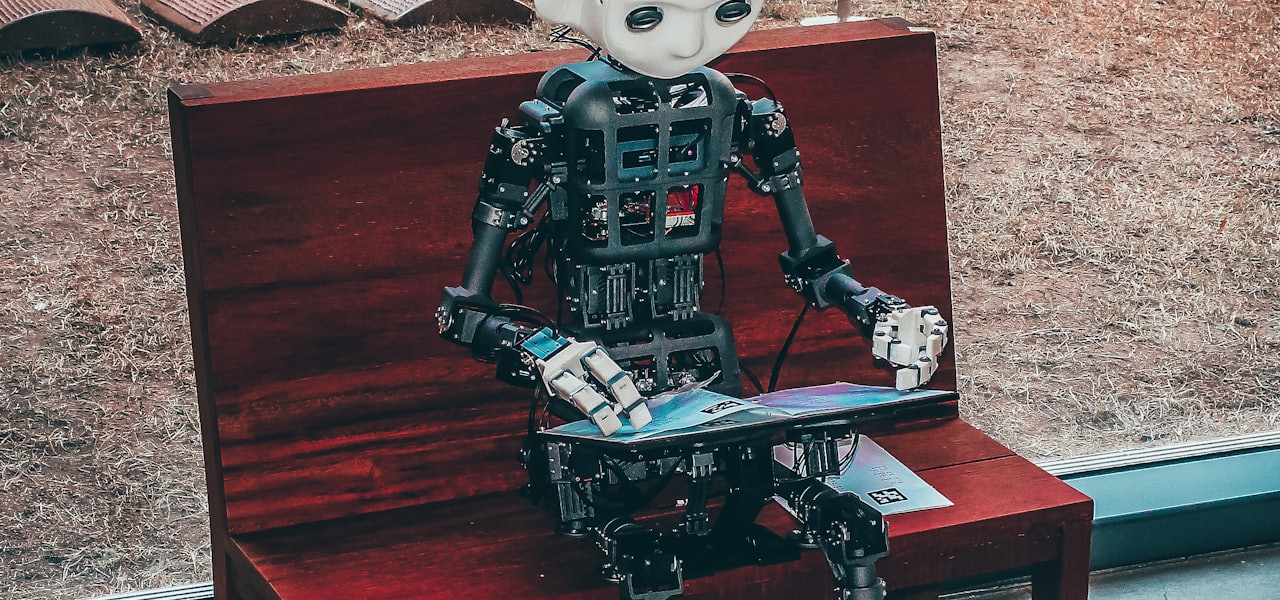
Transhuman Space (THS) is a role-playing game by David Pulver, published by Steve Jackson Games as part of the "Powered by GURPS" (Generic Universal Role-Playing System) line. Set in the year 2100, humanity has begun to colonize the Solar System. The pursuit of transhumanism is now in full swing, as more and more people reach fully posthuman states. In 2002, the Transhuman Space adventure "Orbital Decay" received an Origins Award nomination for Best Role-Playing Game Adventure. Transhuman Space won the 2003 Grog d'Or Award for Best Role-playing Game, Game Line or RPG Setting. == Setting == The game assumes that no cataclysm — natural or human-induced — swept Earth in the 21st century. Instead, constant developments in information technology, genetic engineering, nanotechnology and nuclear physics generally improved condition of the average human life. Plagues of the 20th century (like cancer or AIDS) have been suppressed, the ozone layer is being restored and Earth's ecosystems are recovering (although thermal emission by fusion power plants poses an environmental threat—albeit a much lesser one than previous sources of energy). Thanks to modern medicine humans live biblical timespans surrounded by various artificially intelligent helper applications and robots (cybershells), sensory experience broadcasts (future TV) and cyberspace telepresence. Thanks to cheap and clean fusion energy humanity has power to fuel all these wonders, restore and transform its home planet and finally settle on other heavenly bodies. Human genetic engineering has advanced to the point that anyone—single individuals, same-sex couples, groups of three or more—can reproduce. The embryos can be allowed to be developed naturally, or they can undergo three levels of tinkering: 1. Genefixing, which corrects defects; 2. Upgrades, which boost natural abilities (Ishtar Upgrades are slightly more attractive than usual, Metanoia Upgrades are more intelligent, etc.); and... 3. Full transition to parahuman status (Nyx Parahumans only need a few hours of sleep per week, Aquamorphs can live underwater, etc.) Another type of human genetic engineering, far more controversial, is the creation of bioroids, fully sentient slave races. People can "upload" by recording the simulation of their brains on computer disks. The emulated individual then becomes a ghost, an infomorph very easily confused with "sapient artificial intelligence". However, this technology has several problems as the solely available "brainpeeling" technique is fatal to the original biological lifeform being simulated, has a significant failure rate and the philosophical questions regarding personal identity remain equivocal. Any infomorph, regardless of its origin, can be plugged into a "cybershell" (robotic or cybernetic body), or a biological body, or "bioshell". Or, the individual can illegally make multiple "xoxes", or copies of themselves, and scatter them throughout the system, exponentially increasing the odds that at least one of them will live for centuries more, if not forever. This is also a time of space colonization. First, humanity (specifically China, followed by the United States and others) colonized Mars in a fashion resembling that outlined in the Mars Direct project. The Moon, Lagrangian points, inner planets and asteroids soon followed. In the late 21st century even some of Saturn's moons have been settled as a base for that planet's Helium-3 scooping operations. Transhuman Space's setting is neither utopia nor dystopia, however: several problems have arisen from these otherwise beneficial developments. The generation gap has become a chasm as lifespans increase. No longer do the elite fear death, and no longer can the young hope to replace them. While it seemed that outworld colonies would offer accommodation and work for those young ones, they are being replaced by genetically tailored bioroids and AI-powered cybershells. The concept of humanity is no longer clear in a world where even some animals speak of their rights and the dead haunt both cyberspace and reality (in form of infomorph-controlled bioshells or cybershells). And the wonders of high science are not universally shared — some countries merely struggle with informatization while others suffer from nanoplagues, defective drugs, implants and software tested on their populace. In some poor countries high-tech tyrants oppress their backward people. And in outer space all sort of modern crime thrives, barely suppressed by military forces. == Publication history == After the initial set of GURPS books that were published using the GURPS Lite, later publications such as Transhuman Space by David Pulver were labelled simply "Powered by GURPS" without using the name "GURPS" in the book title. Transhuman Space received a significant amount of supporting publications, and was the largest original background setting that Steve Jackson Games produced in 15 years. Shannon Appelcline noted that by its inclusion of posthuman characters, the book began to show the limits of the GURPS system as it was, which is something that Pulver would address soon thereafter. Steve Jackson Games has not updated the core book (GURPS Transhuman Space) to 4th edition, although the supplement Transhuman Space: Changing Times provides a path for migrating to 4th edition. It has produced several 4th edition supplements for the setting: Transhuman Space: Bioroid Bazaar, Transhuman Space: Cities on the Edge, Transhuman Space: Martial Arts 2100, Transhuman Space: Personnel Files 2-5, Transhuman Space: Shell-Tech, GURPS Spaceships 8: Transhuman Spacecraft, Transhuman Space: Transhuman Mysteries, and Transhuman Space: Wings of the Rising Sun. == Reception == In a review of Transhuman Space in Black Gate, William Stoddard said "Transhuman Space was a richly detailed setting; if it had imperfections, it had enough depth to make up for them. I think it has the potential to become a classic in its field. Perhaps a campaign set in its default start year of 2100 could leave the early twenty-first century blurry enough to avoid obvious incongruities." == Reviews == Review in Vol. 20, No. 1 of Prometheus, the journal of the Libertarian Futurist Society.
Rhetorical structure theory
Rhetorical structure theory (RST) is a theory of text organization that describes relations that hold between parts of text. It was originally developed by William Mann, Sandra Thompson, Christian M. I. M. Matthiessen and others at the University of Southern California's Information Sciences Institute (ISI) and defined in a 1988 paper. The theory was developed as part of studies of computer-based text generation. Natural language processing researchers later began using RST in automatic summarization and other applications. It explains coherence by postulating a hierarchical, connected structure of texts, which are labeled using a small, predefined inventory of relation types - for example, one part of a text may provide an elaboration on another part, provide background or specify a cause for another. In the 2000s, following the release of the first large-scale dataset implementing the theory, the RST Discourse Treebank (RST-DT), Daniel Marcu demonstrated the feasibility of practical applications of RST to discourse parsing and summarization at ISI. Originally limited to written text, subsequent work in the 2010s expanded RST to spoken language analysis, and the framework has been applied to a variety of languages including Farsi, German, Mandarin Chinese, Russian and Spanish. Following the introduction of Transformers, LLMs have been applied to automatic RST parsing, with results approaching human performance on parsing text in English. == Rhetorical relations == Rhetorical relations, also called coherence or discourse relations, are paratactic (coordinate) or hypotactic (subordinate) relations that hold across two or more text spans. The logical arrangement of relations in a text contributes to its coherence by connecting different propositions in a relational structure. RST using rhetorical relations provides a systematic way for an analyst to analyze the underlying intention of a text. The analysis is usually built by reading the text and constructing a tree using the relations. The following example is a title and summary, appearing at the top of an article in Scientific American magazine (adapted from Ramachandran and Anstis, 1986). The original text, broken into numbered units, is: [Title:] The Perception of Apparent Motion [Abstract:] When the motion of an intermittently seen object is ambiguous the visual system resolves confusion by applying some tricks that reflect a built-in knowledge of properties of the physical world. In the figure, the numbers 1-5 show the corresponding units from the text above. Unit 5 provides an "elaboration" on unit 4, and therefore constitutes a less prominent satellite of unit 4, which acts as a nucleus for the relation. Units 4-5 form a relation "Means", explaining the means by which the visual system resolves confusion. Unit 3 is the Central Discourse Unit (CDU) of the text, since all units point to it directly or indirectly. Similarly units 1 and 2 form "preparation" and "circumstance" relations relative to their nuclei. Groups of units which serve as a satellite or nucleus together are called complex discourse units, and always span a set of adjacent EDUs. == Nuclearity in discourse == RST establishes two different types of units. Nuclei are considered as the most important parts of text whereas satellites contribute to the nuclei and are secondary. Nucleus contains basic information and satellite contains additional information about nucleus. The satellite is often incomprehensible without nucleus, whereas a text where satellites have been deleted can be understood to a certain extent. == Hierarchy in the analysis == RST relations are applied recursively in a text, until all units in that text are constituents in an RST relation. The result of such analyses is that RST structure are typically represented as trees, with one top level relation that encompasses other relations at lower levels. == Why RST? == From linguistic point of view, RST proposes a different view of text organization than most linguistic theories. RST points to a tight relation between relations and coherence in text From a computational point of view, it provides a characterization of text relations that has been implemented in different systems and for applications as text generation and summarization. == In design rationale == Computer scientists Ana Cristina Bicharra Garcia and Clarisse Sieckenius de Souz have used RST as the basis of a design rationale system called ADD+. In ADD+, RST is used as the basis for the rhetorical organization of a knowledge base, in a way comparable to other knowledge representation systems such as issue-based information system (IBIS). Similarly, RST has been used in representation schemes for argumentation.
T-norm fuzzy logics
T-norm fuzzy logics are a family of non-classical logics, informally delimited by having a semantics that takes the real unit interval [0, 1] for the system of truth values and functions called t-norms for permissible interpretations of conjunction. They are mainly used in applied fuzzy logic and fuzzy set theory as a theoretical basis for approximate reasoning. T-norm fuzzy logics belong in broader classes of fuzzy logics and many-valued logics. In order to generate a well-behaved implication, the t-norms are usually required to be left-continuous; logics of left-continuous t-norms further belong in the class of substructural logics, among which they are marked with the validity of the law of prelinearity, (A → B) ∨ (B → A). Both propositional and first-order (or higher-order) t-norm fuzzy logics, as well as their expansions by modal and other operators, are studied. Logics that restrict the t-norm semantics to a subset of the real unit interval (for example, finitely valued Łukasiewicz logics) are usually included in the class as well. Important examples of t-norm fuzzy logics are monoidal t-norm logic (MTL) of all left-continuous t-norms, basic logic (BL) of all continuous t-norms, product fuzzy logic of the product t-norm, or the nilpotent minimum logic of the nilpotent minimum t-norm. Some independently motivated logics belong among t-norm fuzzy logics, too, for example Łukasiewicz logic (which is the logic of the Łukasiewicz t-norm) or Gödel–Dummett logic (which is the logic of the minimum t-norm). == Motivation == As members of the family of fuzzy logics, t-norm fuzzy logics primarily aim at generalizing classical two-valued logic by admitting intermediary truth values between 1 (truth) and 0 (falsity) representing degrees of truth of propositions. The degrees are assumed to be real numbers from the unit interval [0, 1]. In propositional t-norm fuzzy logics, propositional connectives are stipulated to be truth-functional, that is, the truth value of a complex proposition formed by a propositional connective from some constituent propositions is a function (called the truth function of the connective) of the truth values of the constituent propositions. The truth functions operate on the set of truth degrees (in the standard semantics, on the [0, 1] interval); thus the truth function of an n-ary propositional connective c is a function Fc: [0, 1]n → [0, 1]. Truth functions generalize truth tables of propositional connectives known from classical logic to operate on the larger system of truth values. T-norm fuzzy logics impose certain natural constraints on the truth function of conjunction. The truth function ∗ : [ 0 , 1 ] 2 → [ 0 , 1 ] {\displaystyle \colon [0,1]^{2}\to [0,1]} of conjunction is assumed to satisfy the following conditions: Commutativity, that is, x ∗ y = y ∗ x {\displaystyle xy=yx} for all x and y in [0, 1]. This expresses the assumption that the order of fuzzy propositions is immaterial in conjunction, even if intermediary truth degrees are admitted. Associativity, that is, ( x ∗ y ) ∗ z = x ∗ ( y ∗ z ) {\displaystyle (xy)z=x(yz)} for all x, y, and z in [0, 1]. This expresses the assumption that the order of performing conjunction is immaterial, even if intermediary truth degrees are admitted. Monotony, that is, if x ≤ y {\displaystyle x\leq y} then x ∗ z ≤ y ∗ z {\displaystyle xz\leq yz} for all x, y, and z in [0, 1]. This expresses the assumption that increasing the truth degree of a conjunct should not decrease the truth degree of the conjunction. Neutrality of 1, that is, 1 ∗ x = x {\displaystyle 1x=x} for all x in [0, 1]. This assumption corresponds to regarding the truth degree 1 as full truth, conjunction with which does not decrease the truth value of the other conjunct. Together with the previous conditions this condition ensures that also 0 ∗ x = 0 {\displaystyle 0x=0} for all x in [0, 1], which corresponds to regarding the truth degree 0 as full falsity, conjunction with which is always fully false. Continuity of the function ∗ {\displaystyle } (the previous conditions reduce this requirement to the continuity in either argument). Informally this expresses the assumption that microscopic changes of the truth degrees of conjuncts should not result in a macroscopic change of the truth degree of their conjunction. This condition, among other things, ensures a good behavior of (residual) implication derived from conjunction; to ensure the good behavior, however, left-continuity (in either argument) of the function ∗ {\displaystyle } is sufficient. In general t-norm fuzzy logics, therefore, only left-continuity of ∗ {\displaystyle } is required, which expresses the assumption that a microscopic decrease of the truth degree of a conjunct should not macroscopically decrease the truth degree of conjunction. These assumptions make the truth function of conjunction a left-continuous t-norm, which explains the name of the family of fuzzy logics (t-norm based). Particular logics of the family can make further assumptions about the behavior of conjunction (for example, Gödel–Dummett logic requires its idempotence) or other connectives (for example, the logic IMTL (involutive monoidal t-norm logic) requires the involutiveness of negation). All left-continuous t-norms ∗ {\displaystyle } have a unique residuum, that is, a binary function ⇒ {\displaystyle \Rightarrow } such that for all x, y, and z in [0, 1], x ∗ y ≤ z {\displaystyle xy\leq z} if and only if x ≤ y ⇒ z . {\displaystyle x\leq y\Rightarrow z.} The residuum of a left-continuous t-norm can explicitly be defined as ( x ⇒ y ) = sup { z ∣ z ∗ x ≤ y } . {\displaystyle (x\Rightarrow y)=\sup\{z\mid zx\leq y\}.} This ensures that the residuum is the pointwise largest function such that for all x and y, x ∗ ( x ⇒ y ) ≤ y . {\displaystyle x(x\Rightarrow y)\leq y.} The latter can be interpreted as a fuzzy version of the modus ponens rule of inference. The residuum of a left-continuous t-norm thus can be characterized as the weakest function that makes the fuzzy modus ponens valid, which makes it a suitable truth function for implication in fuzzy logic. Left-continuity of the t-norm is the necessary and sufficient condition for this relationship between a t-norm conjunction and its residual implication to hold. Truth functions of further propositional connectives can be defined by means of the t-norm and its residuum, for instance the residual negation ¬ x = ( x ⇒ 0 ) {\displaystyle \neg x=(x\Rightarrow 0)} or bi-residual equivalence x ⇔ y = ( x ⇒ y ) ∗ ( y ⇒ x ) . {\displaystyle x\Leftrightarrow y=(x\Rightarrow y)(y\Rightarrow x).} Truth functions of propositional connectives may also be introduced by additional definitions: the most usual ones are the minimum (which plays a role of another conjunctive connective), the maximum (which plays a role of a disjunctive connective), or the Baaz Delta operator, defined in [0, 1] as Δ x = 1 {\displaystyle \Delta x=1} if x = 1 {\displaystyle x=1} and Δ x = 0 {\displaystyle \Delta x=0} otherwise. In this way, a left-continuous t-norm, its residuum, and the truth functions of additional propositional connectives determine the truth values of complex propositional formulae in [0, 1]. Formulae that always evaluate to 1 are called tautologies with respect to the given left-continuous t-norm ∗ , {\displaystyle ,} or ∗ - {\displaystyle {\mbox{-}}} tautologies. The set of all ∗ - {\displaystyle {\mbox{-}}} tautologies is called the logic of the t-norm ∗ , {\displaystyle ,} as these formulae represent the laws of fuzzy logic (determined by the t-norm) that hold (to degree 1) regardless of the truth degrees of atomic formulae. Some formulae are tautologies with respect to a larger class of left-continuous t-norms; the set of such formulae is called the logic of the class. Important t-norm logics are the logics of particular t-norms or classes of t-norms, for example: Łukasiewicz logic is the logic of the Łukasiewicz t-norm x ∗ y = max ( x + y − 1 , 0 ) {\displaystyle xy=\max(x+y-1,0)} Gödel–Dummett logic is the logic of the minimum t-norm x ∗ y = min ( x , y ) {\displaystyle xy=\min(x,y)} Product fuzzy logic is the logic of the product t-norm x ∗ y = x ⋅ y {\displaystyle xy=x\cdot y} Monoidal t-norm logic MTL is the logic of (the class of) all left-continuous t-norms Basic fuzzy logic BL is the logic of (the class of) all continuous t-norms It turns out that many logics of particular t-norms and classes of t-norms are axiomatizable. The completeness theorem of the axiomatic system with respect to the corresponding t-norm semantics on [0, 1] is then called the standard completeness of the logic. Besides the standard real-valued semantics on [0, 1], the logics are sound and complete with respect to general algebraic semantics, formed by suitable classes of prelinear commutative bounded integral residuated lattices. == History == Some particular t-norm fuzzy logics have been introduced and investigated long before the family was re